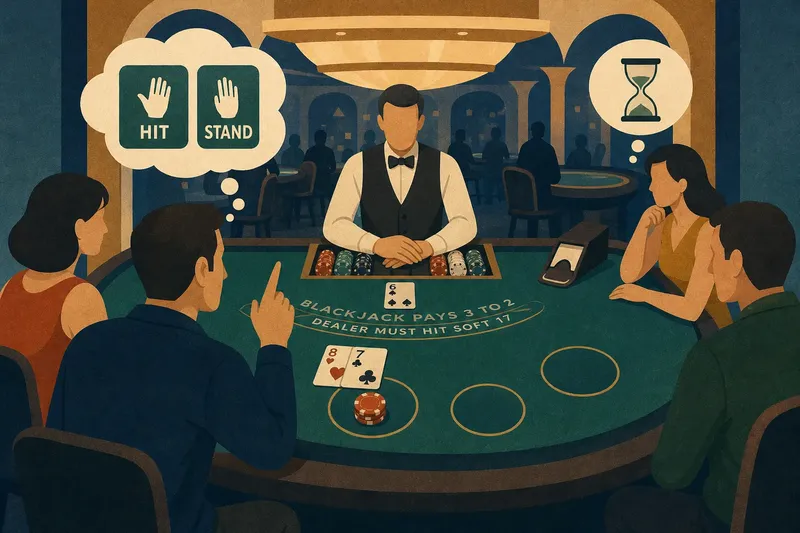
Dealer Call or Table Sign: How to Clarify a Casino Rule
Dealer call or table sign: learn how to check a casino rule, identify what each source covers and ask staff for clarification before acting.
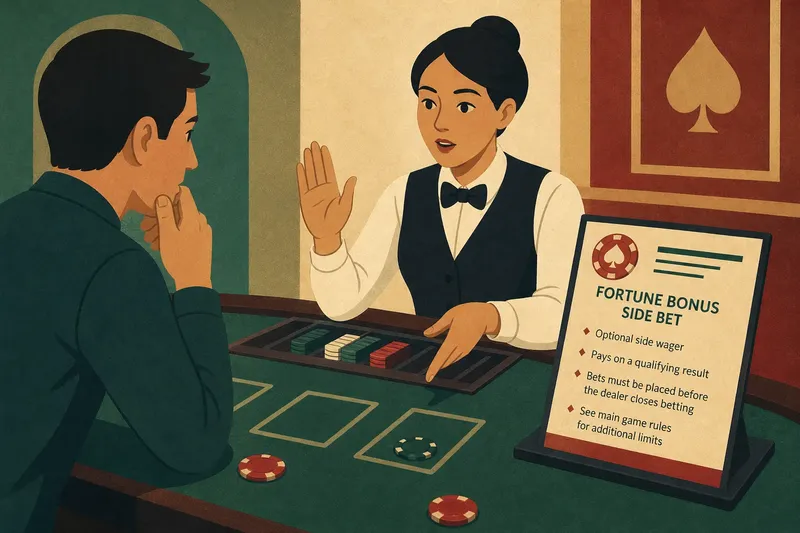
Dealer call or table sign: which should you rely on when a casino rule is easy to miss? Neither format automatically settles a conflict; ask the dealer or appropriate casino staff to clarify the rule before acting when their meaning or scope is uncertain.
A call is usually brief and tied to the action taking place. A sign can preserve fuller conditions in print. Those differences help you identify what each statement may cover, but they do not establish which source takes precedence if the wording appears to conflict.
A dealer call identifies a moment or action
A call such as “bets closed” draws attention to a boundary at the table. Its timing can make it useful when you need to know whether an action is still open.
But a short announcement may not restate exceptions, definitions or the full scope of a rule. If you hear only part of it, you may not know whether it concerns all betting or a particular wager.
A table sign keeps conditions available to read
Printed wording can name an option, state a limit or set out a condition. You can reread it, but first check that it applies to the game and action in question.
A sign near one betting area might address that option alone. Read the relevant sentence together with its heading and nearby conditions. If glare, small type or an obstruction makes the wording uncertain, ask staff to explain it.
Check what each statement covers before you act
Use the wording to identify the subject and scope of each statement. These checks can reveal that a call and a sign address different things; if they appear to govern the same action, do not guess which one takes precedence.
- Observe the call’s subject. If it names a timing boundary, treat it as a cue about that moment; if it names a particular wager, compare that wager with the sign.
- Observe the sign’s heading. If it names the game or option you are considering, read its conditions; if it names another game or area, ask staff which rule applies to your choice.
- Observe whether the sign states a condition. If the condition matches the current situation, consider it relevant; if it does not, look for wording that covers the situation or ask staff.
- Observe whether both statements concern the same action. If they address different actions, keep their scopes separate; if they address the same action, ask staff to clarify the apparent conflict.
- Observe whether the call refers to a standing rule. If its reference is clear, read the sign for the rule’s details; if its scope is unclear, ask the dealer what the call covered.
- Observe whether the printed text is complete and legible. If you can read the relevant condition and exception, use them to understand the notice; if any part is obscured or unclear, ask staff to explain the displayed rule.
Say you hear “bets closed” while a nearby sign describes a special wager. In this invented situation, your starting point is a wager you are considering, a brief call and printed wording whose scope is uncertain. First, read the sign’s heading and conditions to see whether they name that wager. Next, ask the dealer whether the call closes all betting or refers to a particular action. If the call covers all betting, do not place the wager on the assumption that the sign overrides it; if the call has a narrower scope, ask how the sign applies to the wager. The resulting decision is to wait for staff to clarify any remaining conflict before acting, rather than infer precedence from whether a rule was spoken or printed.
What should you ask when a casino rule is unclear?
Does a dealer call replace the printed rule?
Not necessarily. The call may be a brief cue while the sign gives more detail, but neither format alone establishes precedence when their wording conflicts.
What information is easiest to find on a table sign?
A sign can make a named option or condition available to reread. Check its heading and the full relevant passage, since a prominent phrase may not state every limit.
Why might a call and sign seem to conflict?
One may describe the timing of an action while the other describes a condition for a particular option. Compare their subjects; if both appear to cover the same action, ask staff how the rule applies.
What should you do if the wording remains unclear?
Ask the dealer or appropriate casino staff a specific question about the action and the scope of the call or sign. Wait for clarification rather than relying on another player’s interpretation.
Use the source that answers your immediate question
A call is like a note on a calendar: it can point to what happens now, but it does not contain every condition attached to the event. A sign is easier to revisit, yet its wording still needs to be matched to the right game and action.
For a timing cue, listen to the call; for a standing condition or unfamiliar term, read the sign. If the two seem inconsistent, the useful next step is not to choose one by format, but to ask staff which rule applies before you act.