The Near-Miss Story and the Meaning of Almost
A near-miss story makes an almost-win feel vivid. Learn to read the character, game rules and scene without mistaking dramatic tension for a forecast.
What does a near-miss story tell you about chance, and what does it leave unanswered? A near-miss story can make a lost wager feel painfully close to a win, but the scene’s drama does not establish what will happen next. Read the almost as part of the character’s experience, then ask what the game’s rules actually permit you to infer.
A near-miss story turns a result into a scene
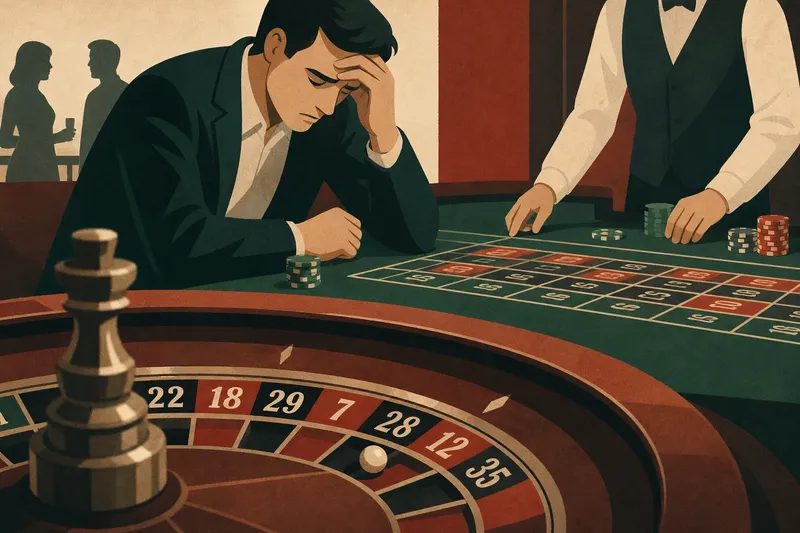
Begin with the result. In an invented roulette scene, a character bets on one number and the ball settles in a neighbouring pocket. The wager loses. The writer may slow the ball’s movement, linger on the player’s face and let the table fall quiet, but those choices shape the reader’s attention, not the result.
Look for words such as “nearly”, “one away” and “so close”, or for a card, symbol or number just outside the desired combination. They mark the gap the story wants you to feel. A near-miss is both an event in the game and a device for directing emotion.
Imagine a fictional slot-machine scene in which the display stops with two matching symbols and a different symbol beside them. The character expected a winning combination, sees the close arrangement and sighs. The visible result is a loss; the pause and sigh make it feel sharper without changing its meaning under the game’s rules.
The almost-win gives the character something to lose
An ordinary loss can be brief. An almost-win lets a character picture success before it vanishes. That flicker of imagined reward gives the scene a small reversal, which can make disappointment, anger or relief more legible.
The response can reveal more than the result. One character may shrug and leave; another may insist the next attempt is bound to succeed. The same close outcome can expose restraint, pride or a growing willingness to chase a loss. Its dramatic meaning comes from how the person interprets it and what they do next.
A near-miss is like a cup set beside the place at the table where you meant to sit: the small distance draws the eye, but it does not move you into the chair. The gap can matter to the character without changing what the game has decided.
Game rules, not visual closeness, determine what follows
A result can look close without being close in probability. A card may be one rank short of a desired hand, or a display may show symbols beside one another. Those images do not, on their own, tell you how likely a later win is.
In an independent game, one result does not make the next result more likely merely because it nearly succeeded. In a card game, by contrast, known cards removed from play can alter what remains possible. Any change comes from the game state and its rules, not from the emotional force of the previous hand.
If a story leaves the mechanics unclear, keep your claim modest. You can say the character feels close to winning, or that the scene encourages the audience to hope. You cannot infer from the near-miss alone that the next outcome has better prospects.
A character’s confidence may be part of the conflict
Listen to what the character says the almost means. “I was nearly there” might express genuine disappointment, a bid to stay hopeful or an excuse to place another wager. The narration may share that conviction, challenge it or simply let it stand as the character’s view.
Imagine a fictional horse-racing scene. Mara backs a horse that finishes just behind the winner, tells her companion that the next race must be hers and places another bet. Her starting point is a narrow loss; her action is a new wager based on confidence; the observable result is that she has risked more, not that her next selection has improved prospects. The story may use this choice to show hope or poor judgement, while the next race remains unknown.
To distinguish a character’s belief from the story’s position, notice what the narration confirms and what later events reveal. A forceful prediction remains a prediction unless the story gives a reason, grounded in the game’s rules, to accept it.
What questions help you read a near-miss story?
Does a near-miss make a win more likely next time?
Not by itself. In an independent game, the previous result does not alter the next one; in a game with changing information, the rules and current state determine what has changed.
Why does an almost-win stay in the mind?
The scene invites you to imagine success, then withdraws it. That contrast can make the character’s disappointment more vivid than a loss presented without suspense.
How can you tell if the story agrees with the character?
Separate what the character says from what the narration confirms. Later consequences may show whether the belief is supported, challenged or simply left unresolved.
Which details should you notice in the scene?
Identify the hoped-for result, the actual result, the details that create a sense of closeness and the character’s response. Then consider what those details suggest about emotion or choice, without treating them as a forecast.
The aftermath gives the almost its story meaning
After the near-miss, watch what changes. Does the character leave, continue, become more cautious or reinterpret the game? That next choice connects chance with agency: the result may be outside the character’s control, but the response belongs to them.
A near-miss story can make chance feel personal because a character attaches hope, regret or resolve to an outcome. The phrase itself does not settle what the game will do next. For a clear reading, hold on to the exact result, the rules the story establishes and the choice the character makes afterwards.